Healing the Blind Man

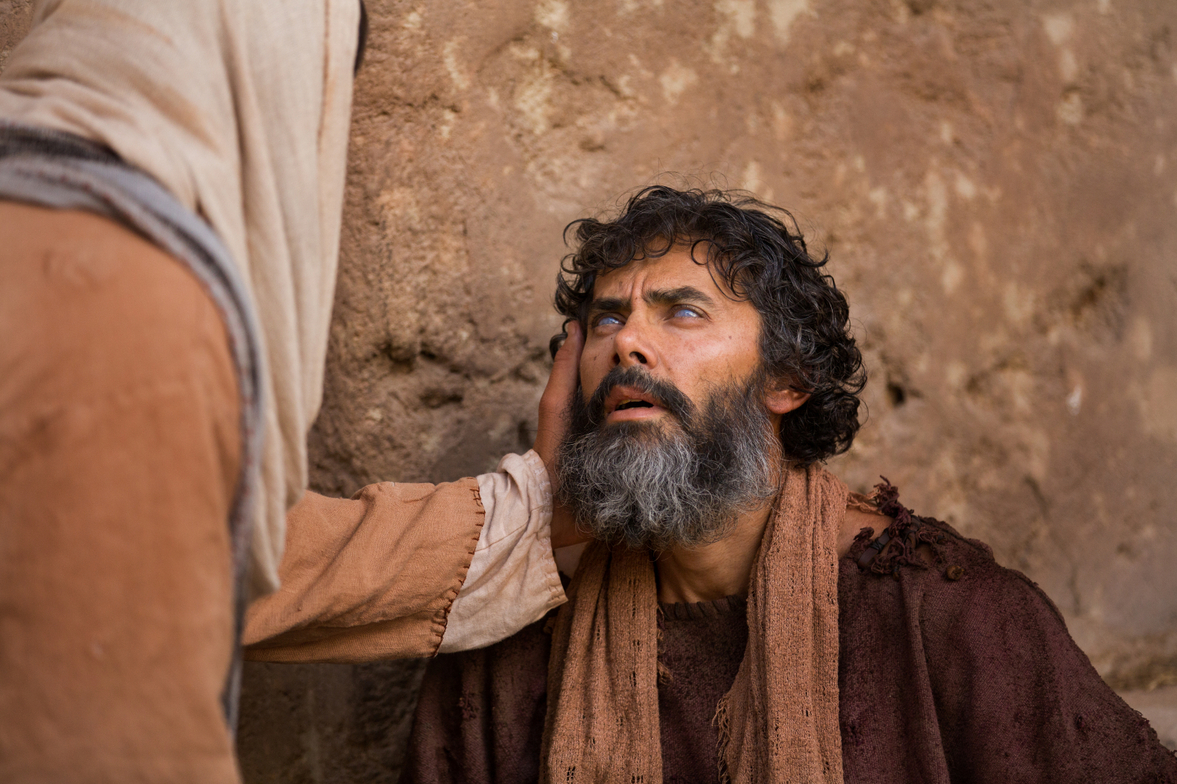
I wanted to share a resource I found beneficial.
This article provides commentary and some valuable insights regarding the Blind Man in John 9:1-7. [See the full article at https://enduringword.com/bible-commentary/john-9/ ]
The Blind Man is healed. 1. (1-2) The disciples ask a question. Now as Jesus passed by, He saw a man who was blind from birth. And His disciples asked Him, saying, “Rabbi, who sinned, this man or his parents, that he was born blind?”
a. As Jesus passed by: The previous chapter ending as Jesus passed by those who wanted to stone Him, considering Jesus guilty of blasphemy. John continues the account, noting now Jesus passed by a man who was blind from birth.
i. The sense of the flow of the text is that Jesus was not shaken or disturbed by the almost deadly confrontation with the religious leaders that just happened. “We find Him calm and self-possessed, acting with a profound disregard of His enemies and their hatred.” (Boice)
ii. Jesus was often reviled but never ruffled. “One of the things worthy to be noticed in our Lord’s character is his wonderful quiet of spirit, especially his marvelous calmness in the presence of those who misjudged, and insulted, and slandered him.” (Spurgeon)
iii. “The blind man was sitting begging (John 9:8), possibly proclaiming the fact of his having been so born; for otherwise the disciples could hardly have asked the following question.” (Alford)
b. Rabbi, who sinned, this man or his parents, that he was born blind? The disciples regarded this man as an unsolved riddle. They showed no interest in helping the man, but in discussing the cause for his condition.
i. Jesus will soon show a different way. He won’t dwell on the theological puzzle, but on actually helping the man. “It is ours, not to speculate, but to perform acts of mercy and love, according to the tenor of the gospel. Let us then be less inquisitive and more practical, less for cracking doctrinal nuts, and more for bringing forth the bread of life to the starving multitudes.” (Spurgeon)
ii. We often suspect that where there is a more than ordinary sufferer, there is a more than ordinary sinner. The disciples believed this so much so that they wondered if this man had actually sinned before he was born, causing his blind condition. “In their thinking about divine retribution they had not advanced far beyond the position of Job’s friends.” (Bruce)
iii. “It was widely held that suffering, and especially such a disaster as blindness, was due to sin. The general principle was laid down by Rabbi Ammi: ‘There is no death without sin, and there is no suffering without iniquity.’” (Morris)
iv. Dods suggested five (5) possible reasons behind their question. · Some of the Jews of that time believed in the pre-existence of souls, and the possibility that those pre-existent souls could sin.
· Some of the Jews at that time believed in some kind of reincarnation, and perhaps the man sinned in a previous existence.
· Some of the Jews at that time believed that a baby might sin in the womb.
· They thought the punishment was for a sin the man would later commit.
· They were so bewildered that they threw out a wild possibility without thinking it through.
2. (3-5) Jesus responds to the question, without answering it.
Jesus answered, “Neither this man nor his parents sinned, but that the works of God should be revealed in him. I must work the works of Him who sent Me while it is day; the night is coming when no one can work. As long as I am in the world, I am the light of the world.”
a. Neither this man nor his parents sinned: First, Jesus said that the man’s blindness – essentially a birth defect – was not caused by some specific sin on the part of the man or his parents.
i. Birth defects and other such tragedies are sometimes due to sinful behavior of the parents. Yet far more often – and in the case Jesus spoke of here – it is due simply to sin and our fallen condition in general, not due to any specific sin. The sin of Adam set the principle of death and its associated destruction in the world, and we have had to deal with it ever since.
b. But that the works of God should be revealed in him: Speaking to this man’s situation, Jesus told them that even his blindness was in the plan of God so that the works of God should be revealed in him.
i. Think of all the times the little blind boy asked his mother, “Why am I blind?” Perhaps she never felt she had a good answer. Jesus explained, it is because God wants to work in and through even this. Jesus pointed the question away from why and on to the idea, what can God do in this?
ii. In this man’s case the specific work of God would soon be revealed: to heal him of his blindness. God may reveal His works in other lives other ways, such as joy and endurance in the midst of the difficulty.
iii. “In the economy of God’s Providence, his suffering had its place and aim, and this was to bring out the works of God in his being healed by the Redeemer.” (Alford)
iv. “Evil furthers the work of God in the world. It is in conquering and abolishing evil that He is manifested. The question for us is not where suffering has come from, but what are we to do with it.” (Dods)
v. “This does not mean that God deliberately caused the child to be born blind in order that, after many years, his glory should be displayed in the removal of the blindness; to think so would again be aspersion on the character of God. It does mean that God overruled the disaster of the child’s blindness so that, when the child grew to manhood, he might, by the recovering of his sight, see the glory of God in the face of Christ, and others, seeing the work of God, might turn to the true Light of the World.” (Bruce) 2
vi. “We must suppose that every sufferer will in the long run be made aware of his share in promoting that advance; though to-day he suffer blindly, little conscious of his privilege.” (Trench)
c. I must work the works of Him who sent Me while it is day: Instead of focusing on the man as a theology problem, Jesus saw him as an opportunity to work the works of God. Jesus sensed an urgency to do this while it was still day – the time of His earthly ministry.
i. I must work is a marvelous statement of Jesus. The Worker is “a well-earned title to the Lord Jesus Christ. He is the worker, the chief worker, and the example to all workers.” (Spurgeon)
ii. “He worked under the limitations of mortality and recognized in the brevity of life another call to eager and continuous service.” (Maclaren)
iii. “Whenever you see a man in sorrow and trouble, the way to look at it is, not to blame him and inquire how he came there, but to say, ‘Here is an opening for God’s almighty love. Here is an occasion for the display of the grace and goodness of the Lord.’” (Spurgeon)
d. The night is coming when no one can work: Jesus understood that opportunities for service and doing good don’t last forever. Jesus knew that healing this man on the Sabbath would bring greater opposition from the religious leaders who already wanted to silence and kill Him. Yet His compassion for the man drove Him to do it anyway.
i. “Our Lord as a man here on earth had a day. It was only a day-a short period, and not very long; he could not make it longer, for it was settled by the great Lord.” (Spurgeon)
3. (6-7) The man is healed.
When He had said these things, He spat on the ground and made clay with the saliva; and He anointed the eyes of the blind man with the clay. And He said to him, “Go, wash in the Pool of Siloam” (which is translated, Sent). So he went and washed, and came back seeing.
Video about the recent excavations of the Pool of Siloam: https://www.youtube.com/watch?v=lkIh1y78-l0
a. He spat on the ground and made clay with the saliva: Jesus used what was undoubtedly one of His more unusual methods leading to a miracle. We can suppose that Jesus wanted to emphasize at least two things.
· Just as God used the dust of the ground and clay to do a work of creation in Genesis, so Jesus did a work of creation with dust and clay for this man.
· Jesus found it important to change His methods of healing so one could never make a formula of the methods. The power was in God, not in a method.
i. “The emphasis of John seems to be on compassion rather than creation. The touch of a friendly hand would be reassuring. The weight of the clay would serve as an indicator to the blind man that something had been done to him, and it would be an inducement to obey Jesus’ command.” (Tenney)
ii. “In His ministry to the souls of men Jesus adopted no stereotyped approach. He dealt with each man as his particular need required.” (Morris)
iii. Several commentators note that what seems so strange to us – using saliva as a medicine upon the eyes – was not so strange in the ancient world.
An article that explains this practice in the ancient world: [https://stmikes.utoronto.ca/news/insightout-healing-moistly-in-ancient-times]
· “Spittle, and especially the spittle of some distinguished persons, was believed to possess certain curative qualities.” (Barclay)
· “The virtue of the fasting saliva, in the cases of disorders of the eye, was well known to antiquity.” (Alford)
iv. Mark recorded two other healings that Jesus performed with the use of His saliva (Mark 7:33 and 8:23).
b. Go, wash in the pool of Siloam: In this miracle, Jesus took all the initiative. Jesus came to the blind man; the blind man did not come to Him. Even so, He expected the blind man to respond with faith-filled action. The healing would not happen unless the man responded with those faith-filled, obedient actions.
i. Not many people would appreciate having mud made with spit rubbed in their eyes. Some would look at how Jesus did this miracle and object, saying that it was offensive, inadequate, or even harmful to rub mud made with spit in a man’s eyes.
· In the same way, some feel that the gospel is offensive. It is true that it offends man’s pride and human wisdom, but it pleased God through the foolishness of the message preached to save those who believe. (1 Corinthians 1:21)
· In the same way, some feel that the gospel is inadequate. But have all the psychiatric and political and social programs in the world done greater good than the life-changing gospel of Jesus Christ?
· In the same way, some feel that the gospel is harmful, that the free offer of grace in Jesus will cause people to sin that grace may abound. But the gospel changes our life for the good and unto purity, not unto wickedness.
ii. The water for the pool of Siloam came through Hezekiah’s tunnel, a remarkable engineering feat built in Old Testament times. “It was called Siloam, which, it was said, meant sent, because the water in it had been sent through the conduit into the city.” (Barclay)
iii. “It was from the Siloam stream that was drawn the water which was poured over the great altar at the Feast of Tabernacles just past, which pouring out was regarded by the Rabbis (and is still) as typical of the pouring out of The Spirit in the ‘latter days’.” (Trench)
iv. Which is translated, Sent: “Again and again John refers to Jesus as having been ‘sent’ by the Father. So now blindness is removed with reference to and with the aid of the ‘sent’.” (Morris)
c. So he went and washed: This took faith, even when Jesus did not even promise the blind man sight in the doing of this. It was surely implied; but the man acted on faith even in the implied promise of Jesus.
i. Still as a blind man he had to find his way down to the pool of Siloam and down its steps to the pool itself. He likely could think of a dozen reasons why this was a fool’s errand, but he went and washed in faith and obedience, because Jesus told him to (and because there was mud in his eyes).
d. And came back seeing: This is the first time in the Biblical record a person born blind was healed of their blindness. From Genesis to John, no prophet, priest, or apostle ever gave sight to eyes born blind.
i. Since healing blind eyes is the work of the Lord, Yahweh, Jehovah, it shows that Jesus is God: The LORD opens the eyes of the blind. (Psalm 146:8)
ii. Opening the eyes of the blind was prophesied to be a work of the Messiah: The eyes of the blind shall be opened. (Isaiah 35:5)
iii. Came back seeing: “The word rendered received sight is literally, recovered sight. Sight being natural to men, the deprivation of it is regarded as a loss, and the reception of it, though never enjoyed before, as a recovery.” (Alford)
iv. “As the impotent man of chapter 5, cured after his thirty-eight years of sickness, may be viewed as a type of the Jews who are yet to be healed, so may this man of chapter 9, blind from birth, be viewed as a type of the Gentiles whose healing was about to begin and who were about to believe into Jesus as Him who was ‘the Sent’ from God.” (Trench)